
In the sun-soaked landscapes of Libya, where history and culture blend seamlessly with daily life, a humble dish carries the essence of tradition and community-Bazeen.Often overshadowed by more globally renowned cuisines, Bazeen is a captivating celebration of wheat, skillfully transformed into a warm, hearty dough that has nourished Libyan families for generations. This article unveils the story behind Bazeen, exploring its rich heritage, the careful artisanal preparation, and the vibrant role it continues to play at tables across Libya. Join us as we discover how this unassuming dish holds a profound place in the heart of Libyan identity, offering not just sustenance but a taste of history and togetherness.
Bazeen Unveiled: this customary wheat dough delight holds a cherished place in Libyan heritage, deeply rooted in the country’s culinary history and cultural identity. Passed down through generations, Bazeen is more than just a hearty dish-it embodies community, celebration, and the artistry of simple ingredients transformed by skilled hands. Growing up,I recall the warm aroma of freshly cooked Bazeen filling my grandmother’s kitchen,a sensory invitation to gather around the communal platter and share stories.This recipe post will guide you through the authentic process of preparing Bazeen dough, exploring its rich flavor variations and the traditional accompaniments that elevate it to a festive centerpiece.
Prep and Cook Time
- preparation: 20 minutes
- Cooking: 40 minutes
- Total Time: 1 hour
Yield
Serves 6 to 8 people, perfect for family gatherings or festive occasions.
Difficulty Level
Medium – requires attention to dough texture and timing but rewarding with practice.
Ingredients for Authentic Bazeen Dough
- 2 cups whole wheat flour, sifted for a finer texture
- 1 cup barley flour (optional, for traditional nutty earthiness)
- 1 tsp salt
- 1½ cups warm water, adjust as needed for dough consistency
- 2 tbsp olive oil
- 1 tsp baking powder (optional, for lighter texture)
- Pinch of ground cumin (optional, for a fragrant hint)
Step-by-Step Guide to Preparing Authentic bazeen Dough
- Combine Dry Ingredients: In a large mixing bowl, whisk together the whole wheat flour, barley flour, salt, baking powder, and cumin until evenly blended.
- Add Warm water Gradually: Slowly pour in the warm water while stirring with a wooden spoon or your hand to begin forming a dough. The mixture should be stiff and slightly sticky but pliable.
- Knead the Dough: Transfer the dough onto a lightly floured surface. Knead vigorously for 8-10 minutes until smooth and elastic. This development is crucial for Bazeen’s characteristic chewy texture.
- Rest the Dough: Cover the dough with a damp cloth and let it rest for 15 minutes, allowing the gluten to relax and improve pliability.
- Forming the Bazeen: Shape the dough into a tight ball. traditionally, the dough is then placed in a rounded iron or clay pot, but a heavy non-stick pan works well. Using a wooden spoon or hand-held paddle, press and turn the dough over medium heat, cooking for about 25 minutes.
- Cook with Olive Oil: Drizzle the olive oil around the dough as it cooks to prevent sticking and enrich flavor. Flip occasionally until it develops a firm crust and a tender interior-similar to a thick bread base.
- Final Cooking Touch: Once firm, remove from heat and let it rest a few minutes before serving to set its shape.
Exploring Flavor Variations and Traditional Accompaniments
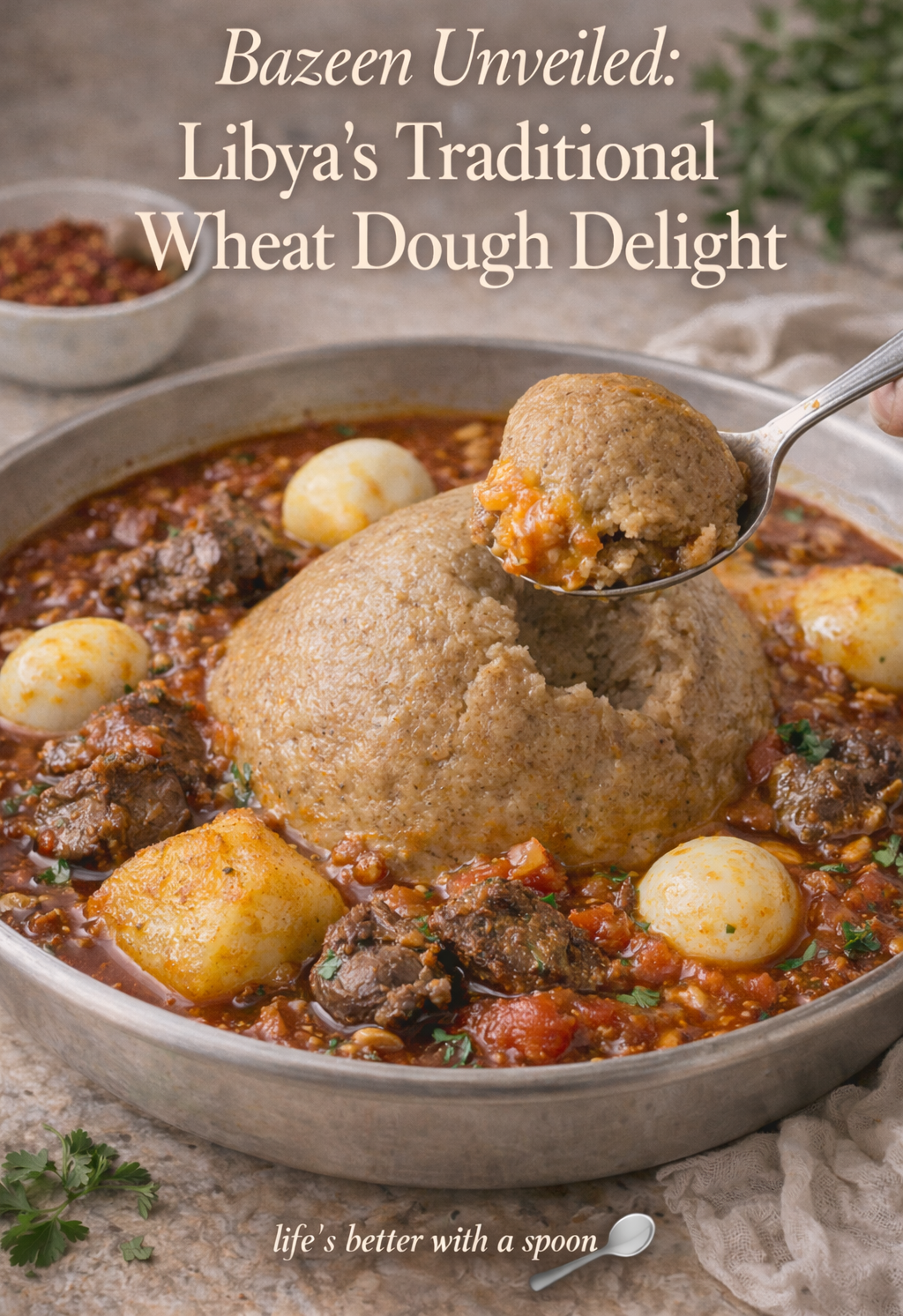
While the dough itself is a simple symphony of wheat and water, its strength lies in versatile pairing opportunities. Traditionally, Bazeen is served with a robust tomato and lamb stew, infused with garlic, cumin, and paprika. Vegetables like potatoes, carrots, and eggs are nestled alongside or atop the mound of dough. Some families add a drizzle of seasoned olive oil or a spicy chili sauce for an extra kick.
Regionally, additions such as crushed red pepper, sumac, or even dried fruit can subtly alter the flavor profile. Experiment with layering your accompanying stew to balance earthy, spicy, and tangy notes that complement the dough’s nutty base.
Tips for Perfecting Bazeen Serving presentation and Pairings
- Present Bazeen as a central mound on a large, rustic communal platter, surrounded by vibrant vegetable stews that add bright color contrast.
- Garnish the stew with fresh parsley, hard-boiled egg halves, and a sprinkle of toasted cumin seeds for authentic appeal.
- Serve with flatbreads or traditional Libyan tea to complete the meal.
- For an inviting texture contrast, accompany with pickled vegetables or chilies, refreshing the palate.
- Warm your serving dish beforehand to maintain Bazeen’s comforting warmth throughout your gathering.
Chef’s Notes
- If you can’t find barley flour, substitute entirely with whole wheat flour for a denser dough.
- Don’t rush the kneading-proper gluten development is key for the signature chewy texture.
- Use olive oil generously when cooking to avoid sticking and add richness.
- Make-ahead tip: Prepare the dough, shape and cook the Bazeen, then cool and refrigerate. Reheat gently wrapped in foil and brushed with olive oil to refresh texture.
- For gluten-sensitive diets, you can experiment with gluten-free flours, but expect different textural results.
Nutritional Facts per serving
| Calories | Protein | Carbohydrates | Fat |
|---|---|---|---|
| 220 kcal | 6g | 44g | 4g |

For a deeper exploration of Middle Eastern wheat-based dishes, check out our Middle Eastern bread Traditions article. For ancient context on Libyan cuisine, visit Britannica’s overview of Libyan cuisine.
Q&A
Q&A: bazeen Unveiled - Libya’s Traditional Wheat Dough Delight
Q1: What exactly is bazeen?
A1: Bazeen is a beloved Libyan dish crafted from a simple yet hearty wheat dough. This traditional delight is made by boiling finely ground wheat flour into a dense, malleable dough, which is then shaped into a dome-like form. It’s both a staple and a symbol of Libyan culinary heritage.
Q2: How is bazeen traditionally prepared?
A2: The preparation of Bazeen is a ritual in itself. Wheat flour is slowly stirred into boiling salted water until it thickens into a doughy mass. Traditionally, a special wooden stick called a magraf is used to knead and shape the dough. The Bazeen dome is then placed on a platter and often surrounded by a rich sauce of tomatoes, onions, lamb or beef, and aromatic spices.
Q3: What makes Bazeen distinct from other dough-based dishes?
A3: Unlike breads or flatbreads that are baked or fried, Bazeen’s distinct texture comes from its simmered and kneaded form, giving it a firm yet tender bite. It’s served as a communal dish, meant to be scooped up by hand and shared, inviting connection and tradition around every meal.
Q4: Are there any customary accompaniments to Bazeen?
A4: Absolutely! bazeen is commonly served with a flavorful sauce made from lamb or beef stewed with tomatoes, garlic, and a medley of spices such as cumin, coriander, and chili. Frequently enough, hard-boiled eggs and olives garnish the dish, adding color and richness to the presentation.
Q5: What cultural meaning does bazeen hold in Libya?
A5: Bazeen is more than just food; it’s a culinary manifestation of Libyan identity and hospitality. Sharing Bazeen is an expression of community and family bonding. Whether during festive celebrations or daily meals, this dish carries stories passed down through generations, warming both stomach and spirit.
Q6: Can Bazeen be adapted for modern kitchens or dietary preferences?
A6: Certainly! While the traditional method is cherished, contemporary cooks might experiment by using whole wheat flour for added nutrition, or even gluten-free flours for those with sensitivities. The sauce can be tailored to include vegetable-based alternatives, making Bazeen accessible and alive in all kinds of kitchens.
Q7: Why should food enthusiasts explore Bazeen?
A7: For the adventurous palate, Bazeen offers a window into Libya’s rich cultural mosaic. It’s a dish that invites you to engage with history, community, and flavor in one comforting bite.Exploring Bazeen is not just tasting food-it’s experiencing a vibrant tradition served on a plate.
In Summary
As the sun sets over the golden Libyan plains, Bazeen remains a testament to the country’s rich culinary heritage-a humble wheat dough transformed into a dish that nourishes both body and spirit. More than just food, Bazeen tells a story of community, tradition, and the enduring rhythms of daily life in Libya. Whether shared around a bustling family table or savored in quiet reflection, this time-honored delight invites us to savor the flavors of history and the warmth of cultural connection. In uncovering Bazeen, we don’t just taste a meal; we taste the heart of Libya itself.